Washington Evacuates Personnel from Saudi Arabia as Middle East Conflict Intensifies
The United States has mandated the withdrawal of non-essential government personnel from Saudi Arabia as regional warfare expands throughout the Middle East, while Iran has dismissed prospects for an immediate cessation of hostilities.
The American embassy in Riyadh justified the evacuation by pointing to escalating security threats from armed conflicts, terrorist activities, and missile strikes originating from Yemen and Iran. This represents the first evacuation directive issued by the U.S. in Saudi Arabia since the current conflict commenced.
Israeli forces announced on Monday the launch of fresh military operations targeting what they described as terrorist infrastructure within central Iran. Meanwhile, an Iranian foreign ministry representative accused Washington of pursuing Iranian petroleum resources with the goal of undermining and fragmenting the nation.
Regarding ceasefire possibilities, the Iranian official stated that continued aggression makes discussions pointless except for defensive measures and counter-strikes against adversaries.
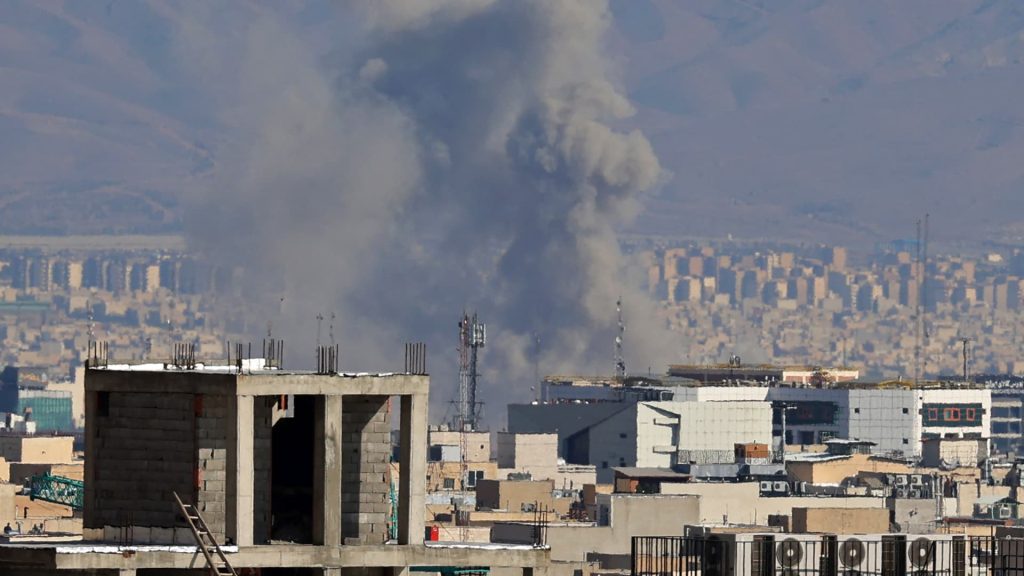
These developments followed weekend attacks on multiple Iranian energy facilities, which resulted in fires and dense smoke clouds over Tehran and nearby Karaj. These strikes marked the first documented assault on Iran’s energy infrastructure since hostilities began.
Oil markets responded dramatically, with crude prices jumping above $110 per barrel on Monday following announcements from several Middle Eastern producers regarding output reductions. Finance ministers from G7 nations are scheduled to address potential coordinated releases from strategic petroleum reserves to address supply disruptions.
The price surge coincided with ongoing disruptions in the Strait of Hormuz, a critical global oil transit route. Maritime traffic has been severely impacted after Tehran issued threats against vessels attempting passage through this strategic waterway.
U.S. Energy Secretary Chris Wright indicated that normal shipping operations would resume only after Washington eliminates Tehran’s capacity to threaten maritime commerce.
Energy analyst Clayton Seigle from CSIS observed that market optimism about containing the conflict has evaporated, suggesting an extended crisis period as markets struggle to adapt to rapidly changing circumstances.
Iran has appointed Mojtaba Khamenei, son of the deceased Supreme Leader Ayatollah Ali Khamenei, as the nation’s new supreme authority, consolidating power over the Revolutionary Guard and other hardline factions.
Israel has previously indicated that any successor to Khamenei would become a potential target, while President Trump warned that new Iranian leadership would face a brief tenure without his endorsement.
Former CIA Director David Petraeus characterized the leadership selection as problematic, describing Mojtaba as representing continuity with his father’s hardline ideological approach.
Russian President Vladimir Putin extended congratulations to Iran’s new leader and pledged Moscow’s continued partnership with Tehran, emphasizing Russia’s role as a dependable ally to the Islamic Republic.
Reports suggest Trump is considering deploying special operations forces to secure Iran’s weapons-grade uranium stockpiles, as officials work to verify the location of highly enriched nuclear materials.
Following oil price increases, Trump posted on social media that temporary petroleum price spikes represent a minimal cost for eliminating Iran’s nuclear capabilities, dismissing alternative viewpoints.
Asian equity markets plummeted as investors reduced risk exposure amid concerns about prolonged conflict duration, while European markets declined over two percent in early trading.
The escalation follows earlier Iranian signals about reducing regional tensions. In a weekend video statement, Iranian President Masoud Pezeshkian apologized for strikes against neighboring countries and pledged to cease attacks on nations not supporting U.S.-Israeli operations.
However, Saudi Arabia reported continued Iranian aggression, characterizing the attacks as based on unfounded justifications that escalate tensions and damage bilateral relations.
Iran has deployed swarms of Shahed kamikaze drones to overwhelm Gulf region air defenses, citing the presence of American military installations and regional support for U.S. operations. These same drone systems have become integral to Russia’s ongoing Ukraine invasion.
Ukrainian President Volodymyr Zelenskyy revealed that Kyiv agreed to American requests to deploy expert teams and interceptor drones to protect U.S. military facilities in Jordan, offering a cost-effective alternative to traditional missile defense systems.
Additional nations are evaluating assistance requests from Gulf states. Australia confirmed it is reviewing defensive military support requests while maintaining its position against participating in offensive operations against Iran.
China dispatched a special envoy to the Middle East for ceasefire mediation efforts. Foreign Minister Wang Yi reiterated Beijing’s calls for ending military action, describing the conflict as an unnecessary war that should never have occurred.